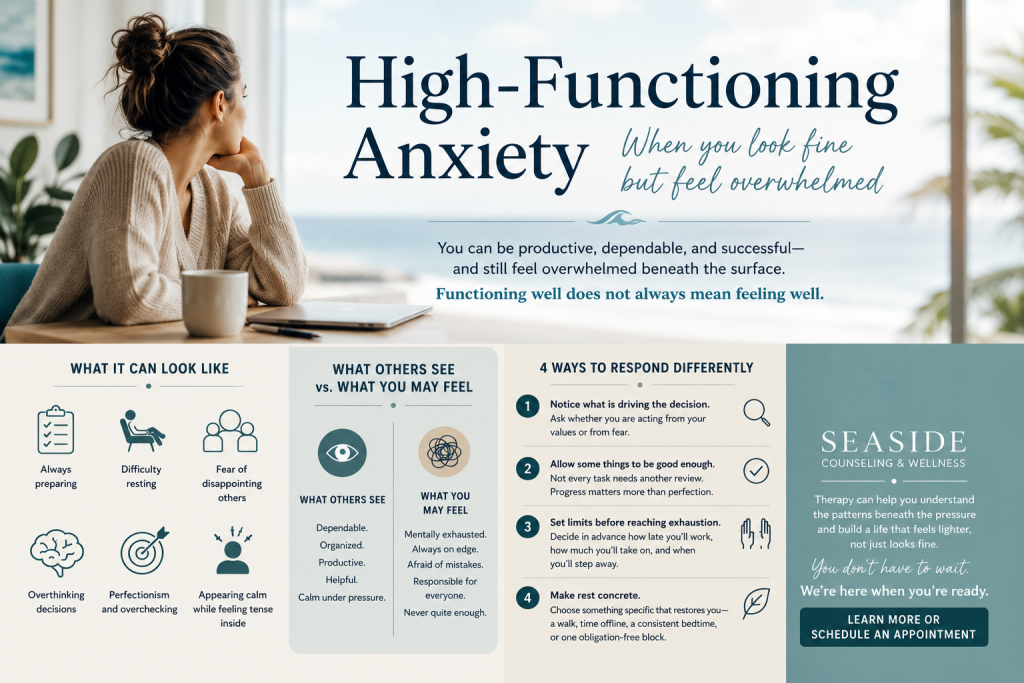
High-Functioning Anxiety:
When You Look Fine but Feel Overwhelmed
High-functioning anxiety does not always look like panic, avoidance, or obvious distress.
Sometimes it looks like staying busy, meeting deadlines, helping everyone else, and appearing completely capable. From the outside, everything may seem under control. Internally, however, there may be constant worry, overthinking, tension, exhaustion, and pressure to keep performing.
You can be functioning well and still be struggling.
What Is High-Functioning Anxiety?
“High-functioning anxiety” is not a formal clinical diagnosis. It is a common term used to describe people who experience significant anxiety while continuing to manage work, school, relationships, parenting, and other responsibilities.
Because the person is still functioning, the anxiety can be easy to overlook. Others may see someone who is organized, dependable, ambitious, or calm under pressure. They may not see the fear of disappointing people, the difficulty resting, the constant mental rehearsal, or the exhaustion behind that performance.
For many people, productivity becomes a way to manage anxiety. Staying busy creates a temporary sense of control, but it can also make it harder to recognize when the pattern is no longer sustainable.
Common Signs of High-Functioning Anxiety
High-functioning anxiety can look different from person to person, but common patterns may include:
- Overthinking conversations and decisions
- Difficulty relaxing without feeling guilty
- Perfectionism or fear of making mistakes
- Constantly preparing for what might go wrong
- Trouble saying no or disappointing others
- Appearing calm while feeling tense internally
- Procrastinating because the pressure to perform feels overwhelming
- Reassurance-seeking
- Taking on too much responsibility
- Difficulty sleeping because the mind will not slow down
- Feeling emotionally exhausted despite continuing to meet expectations
These patterns are often praised. Being highly prepared, dependable, and productive can bring recognition and success. The problem is not competence. The problem is the internal cost of maintaining it.
Why It Can Be Difficult to Recognize
Many people assume anxiety must interfere with daily functioning before it deserves attention. That belief can keep someone stuck for years.
A person may tell themselves:
“I’m still getting everything done.”
“Other people have it worse.”
“I just need to be more disciplined.”
“This is what being responsible feels like.”
But functioning is not the same as feeling well.
You do not have to wait until your work suffers, your relationships become strained, or your body forces you to stop before taking your anxiety seriously.
High-functioning anxiety is often hidden because the coping strategies appear productive. Overplanning may look like preparation. People-pleasing may look like kindness. Perfectionism may look like ambition. Emotional avoidance may look like independence.
The behavior may work in the short term while creating long-term stress.
The Cost of Always Holding It Together
Maintaining a capable exterior can become exhausting.
When anxiety is driving performance, rest may feel unsafe. Slowing down may create more discomfort because there is finally room for difficult thoughts and emotions to surface. Some people fill every available moment with work, errands, social obligations, or screen time to avoid that discomfort.
Over time, this can contribute to:
- Burnout
- Irritability
- Sleep problems
- Muscle tension or headaches
- Emotional disconnection
- Difficulty being present
- Resentment in relationships
- Reduced enjoyment
- Increased reliance on avoidance or unhealthy coping habits
The goal is not to become less responsible or less motivated. The goal is to stop using constant pressure as the primary way to function.
High-Functioning Anxiety in Relationships
Anxiety can also affect how people connect with others.
Someone with high-functioning anxiety may avoid asking for help because they do not want to appear needy or incapable. They may overanalyze text messages, assume they have upset someone, or feel responsible for keeping everyone comfortable.
They may say “I’m fine” because explaining what is happening feels too difficult, or because they are not sure anyone would understand.
This can create distance. Loved ones may not realize support is needed because the person appears self-sufficient.
Learning to communicate anxiety more honestly can reduce that pressure. It may begin with something simple:
“I’m handling everything, but I’m more overwhelmed than I look.”
“I don’t need you to fix this, but I do need support.”
“I’m having a hard time slowing my thoughts down.”
Being honest does not make someone less capable. It gives other people a clearer opportunity to respond.
Practical Ways to Manage High-Functioning Anxiety
Small changes are often more sustainable than trying to completely overhaul your life.
Notice what is driving the behavior
Ask whether a decision is being driven by values or fear.
Are you taking on the responsibility because it matters to you, or because you are afraid of disappointing someone? Are you preparing because preparation is useful, or because you believe nothing can be left uncertain?
The behavior may look the same from the outside, but the motivation matters.
Practice tolerating “good enough”
Perfectionism often keeps anxiety active. Try completing a low-risk task without overchecking, rewriting, or refining it.
This does not mean lowering important standards. It means recognizing when extra effort is no longer improving the outcome.
Create limits before you reach exhaustion
Do not wait until you are overwhelmed to establish boundaries.
Decide how late you will work, how many commitments you can reasonably accept, or when you will step away from a draining conversation. Boundaries are easier to maintain when they are planned rather than created during a crisis.
Make rest specific
“Relax more” is vague and difficult to follow. Choose a concrete form of rest: a walk without your phone, thirty minutes without work, a consistent bedtime, or an afternoon without obligations.
Rest may feel uncomfortable at first. That discomfort does not mean you are doing it wrong.
Reduce reassurance loops
Repeatedly checking, asking for confirmation, or reviewing past conversations may bring brief relief, but it can reinforce anxiety over time.
Before seeking reassurance, pause and ask: “Do I need new information, or am I trying to eliminate uncertainty?”
Talk to someone before reaching a breaking point
Therapy is not only for crisis.
It can help identify patterns, reduce avoidance, build coping skills, improve boundaries, and create a healthier relationship with achievement and responsibility.
How Therapy Can Help
Therapy can provide space to understand what keeps the anxiety active and how it affects daily life.
Depending on the person’s needs, treatment may focus on:
- Challenging anxious thought patterns
- Reducing perfectionism
- Building tolerance for uncertainty
- Improving emotional awareness
- Setting healthier boundaries
- Developing practical coping strategies
- Understanding family, relationship, or attachment patterns
- Separating self-worth from productivity
The goal is not to remove every anxious thought. It is to reduce the amount of control anxiety has over decisions, relationships, and daily routines.
You Do Not Have to Look Unwell to Need Support
High-functioning anxiety can be difficult to name because life may still look successful from the outside.
But success does not cancel distress.
You can be dependable and exhausted. You can be productive and overwhelmed. You can appear calm and still need support.
You do not have to wait until you can no longer function before making a change.
Start a Conversation With Seaside Counseling & Wellness
Seaside Counseling & Wellness works with individuals navigating anxiety, perfectionism, stress, life transitions, relationship challenges, and emotional exhaustion.
Therapy can help you understand the patterns beneath the pressure and build ways of coping that do not depend on constantly pushing through.
Contact Seaside Counseling & Wellness to learn more about available counseling services in Mount Pleasant, South Carolina.


