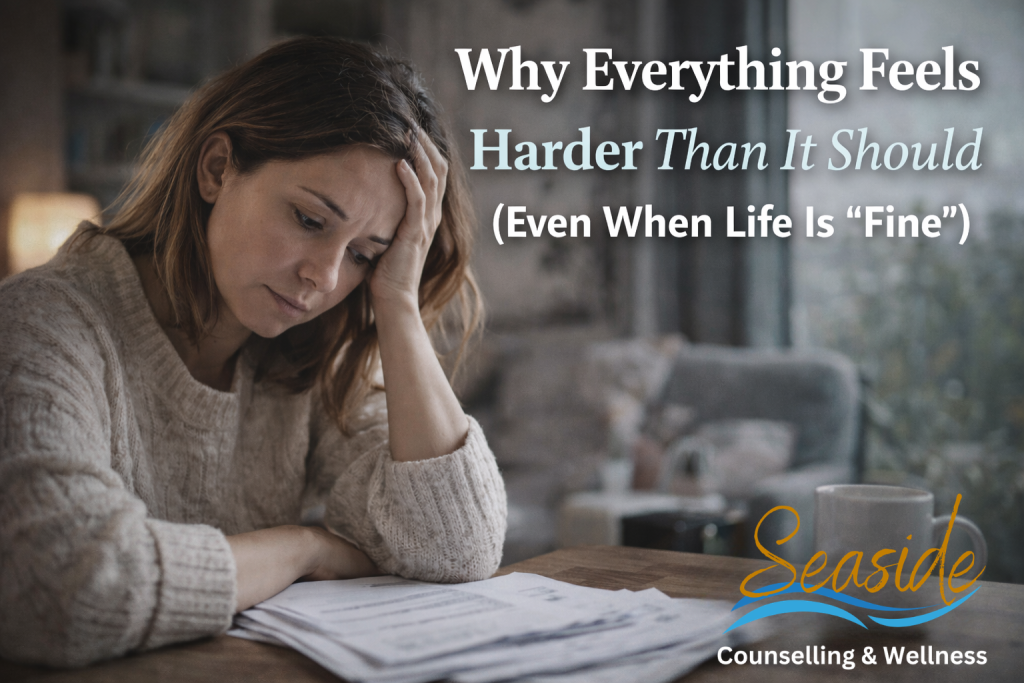
Why Everything Feels Harder Than It Should
(Even When Life Is “Fine”)
There are days where nothing is technically wrong—but everything feels heavier than it should.
You wake up, move through your routine, handle what needs to be handled. You answer messages, show up to work, get through conversations. From the outside, the day looks normal. Productive, even.
But it takes more effort than it used to.
Things that once felt simple now feel like they require a little more from you. Decisions take longer. Your patience runs thinner. By the end of the day, you’re more drained than makes sense for what you actually did. It’s not overwhelming in an obvious way—it’s just a quiet, constant sense that everything requires more energy than it should.
And because you’re still functioning, it’s easy to overlook.
It doesn’t feel like something you’re “allowed” to struggle with. You tell yourself you’re just tired, or that it’s a busy stretch, or that this is just what life feels like sometimes. So you keep going, assuming it will pass.
But that low-level weight usually has a reason.
Sometimes it’s stress that’s been building slowly over time—not one defining moment, but a steady accumulation of responsibilities, expectations, and pressure without much space to reset. Other times, it’s emotional fatigue—the kind that comes from always being on, always managing, always showing up for others without checking in with yourself.
And sometimes, it’s a quieter kind of disconnection.
You’re present in your life, but not fully in it. You move through routines without really experiencing them. Things that used to feel easy or enjoyable now feel muted. Not bad—just… flat. And over time, that subtle shift starts to change how your days feel. What used to feel manageable begins to feel like something you’re just getting through.
That’s usually where awareness becomes important.
Not in a dramatic, something-is-wrong kind of way—but in a quieter recognition that your internal experience has changed. That something feels different, even if you can’t fully explain why.
You don’t need a breaking point to pay attention to that.
In fact, waiting for things to get worse often makes it harder to sort through later. When you notice it early—when it’s still subtle—you have more room to understand what’s actually going on beneath the surface.
That might start with slowing down just enough to ask yourself a few honest questions. When did this start feeling different? What feels heavier than it used to? Where do you feel the most drained? Not just what your days look like—but what they actually feel like to move through.
You don’t need immediate answers. But creating space to notice those patterns is often where things begin to shift.
At Seaside Counseling & Wellness, this is something we see often—people who are capable, responsible, and showing up in their lives, but carrying more than they realize underneath it all. There’s nothing broken about that. But it is something worth understanding.
Because that quiet weight you’ve been pushing through doesn’t usually resolve on its own. It tends to stay until something changes—whether that’s your pace, your awareness, or how you process what you’re carrying.
And that change doesn’t have to be dramatic.
It can start with simply recognizing that feeling heavier than you should isn’t something you have to normalize. That you can take it seriously before it turns into something bigger.
And that it’s okay to start figuring out what would actually make things feel lighter again.


